Cobá, A Mayan Legacy
Let’s go back in time to Cobá, a once-powerful Mayan city nestled amidst the lush jungles of Quintana Roo. Unlike other coastal sites, Cobá thrived inland, strategically positioned near five lagoons that were crucial for its development and sustenance.
Covering approximately 70 square kilometers, Cobá was a vital hub connected by an intricate network of raised stone causeways known as sacbéob (white roads). The longest of these impressive pathways stretched for 100 kilometers to Yaxuná, a site close to Chichén Itzá.
Cobá’s story unfolds over centuries. Early settlements, dating between 100 BC and 300 AD, consisted of small villages near the lakes, with economies based on agriculture and hunting. Between 300 and 600 AD, Cobá rose to prominence, centralizing economic and political power and controlling numerous surrounding settlements.
The construction of over 50 sacbéob, both within the city and connecting it to other regions, took place between 600 and 800 AD. This period also saw the erection of many of the site’s stelae (carved stone monuments).
Cobá reached its peak between 800 and 1000 AD, expanding its road network, constructing new buildings, and strengthening ties with the Gulf Coast while its connections with the Petén region declined. Between 1000 and 1450 AD, Cobá’s influence began to wane as it experienced influences from more “Mexicanized” groups, leading to a shift in architectural styles and the repositioning of some sculpted monuments.
The name Cobá, as evidenced by hieroglyphic inscriptions, was the city’s original name. The most likely meaning, given its lagoon setting, is “stirred waters” or “rippled waters.”
Tips for your Cobá visit:
Transportation: Cobá is easily accessible from Cancun via Highway 307 south towards Tulum, then Highway 109 towards Nuevo Xcan. Public transportation is also available.
Hours and Admission: The site is open Monday to Sunday from 8:00 AM to 5:00 PM (last access at 4:00 PM). The entrance fee is $100 pesos.
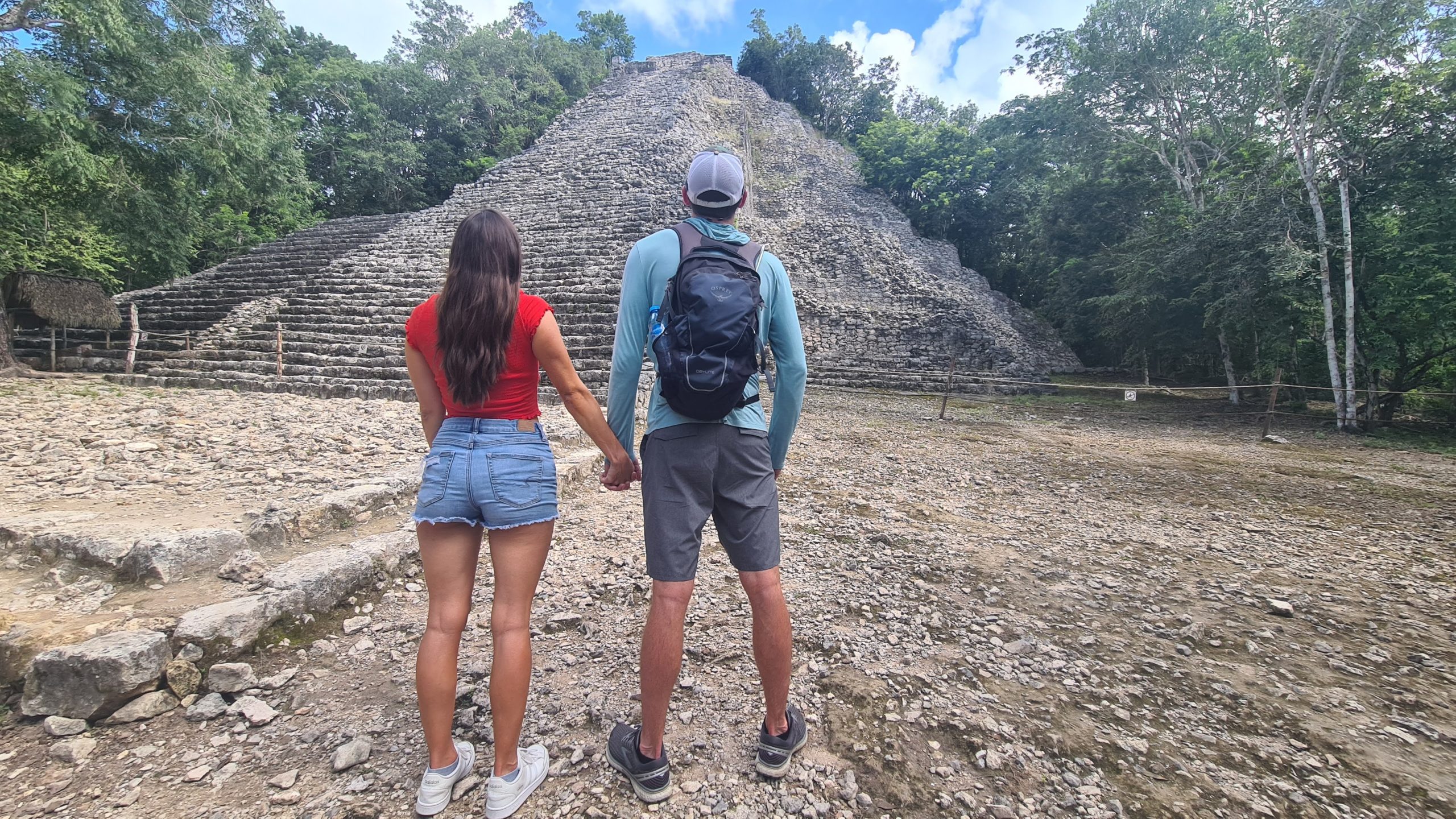
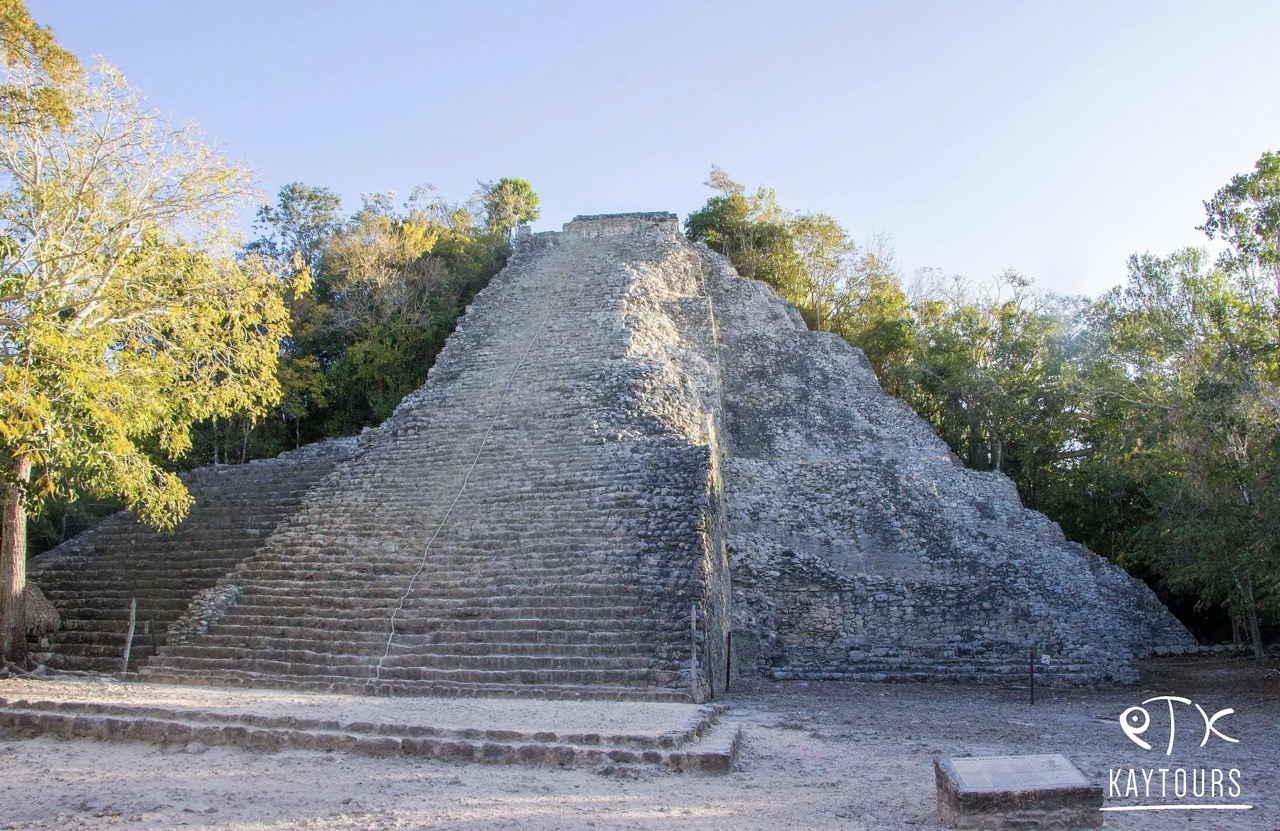
What to see: Don’t miss the Nohoch Mul pyramid, one of the tallest Mayan structures in the Yucatan Peninsula. Explore the intricate sacbéob, and examine the numerous stelae depicting important historical events.
Maximize your visit: Wear comfortable shoes and light clothing, bring water and sunscreen, and consider renting a bicycle to explore the vast site more efficiently.
Cobá offers a fascinating glimpse into the rich history and culture of the Mayan civilization. It’s a must-see destination for anyone exploring the Riviera Maya.
Want to explore Cobá? Visit Kay Tours Mexico to find the perfect Cobá excursion for you!